
The 2022 PDF details essential skills for Soldier proficiency.
Resources from sites like StudyLib and SlideShare highlight constant review and updates.
These drills ensure readiness and adaptability on the modern battlefield.
Purpose and Overview
Army Warrior Tasks and Battle Drills, as outlined in the 2022 PDF and supporting documentation found on platforms like StudyLib and SlideShare, serve as the foundational building blocks for individual and collective warfighting capabilities. The primary purpose is to standardize training across the Army, ensuring all Soldiers possess a common core competency in critical skills necessary for success in diverse operational environments.
This comprehensive system isn’t static; it’s under constant review based on feedback from real-world experiences and evolving threats; The overview encompasses a range of skills, from immediate action drills to complex battle drills, designed to enhance survivability, lethality, and adaptability. The 2022 revision reflects lessons learned and incorporates best practices to optimize Soldier performance. Accessing the PDF provides a detailed understanding of these vital procedures, promoting proficiency and readiness throughout the force. These drills are not merely procedural; they cultivate a mindset of proactive engagement and decisive action.
Historical Context of Warrior Tasks
The concept of standardized Warrior Tasks isn’t new; its roots trace back to the earliest military doctrines emphasizing fundamental soldier skills. Throughout history, armies have recognized the need for consistent training in areas like marksmanship, movement, and battlefield communication. However, the formalization of these tasks into a structured system, as seen in the 2022 PDF and resources like those on StudyLib and SlideShare, evolved significantly through lessons learned from conflicts.
Early iterations focused on linear tactics, but modern adaptations, continually under constant review, reflect the complexities of asymmetric warfare and the need for decentralized execution. The emphasis shifted from rote memorization to adaptable application, fostering initiative and critical thinking. The 2022 revision builds upon decades of refinement, incorporating best practices from recent operations. Understanding this historical context highlights the enduring importance of these tasks in maintaining a combat-ready force, ensuring Soldiers are prepared for any challenge.
The 2022 Revision: Key Changes
The 2022 PDF representing Army Warrior Tasks and Battle Drills reflects a significant update, prioritizing adaptability in the modern operational environment. Key changes focus on integrating lessons learned from recent conflicts and evolving threats. A notable shift involves increased emphasis on small unit tactics, recognizing the prevalence of decentralized operations. Resources like those found on StudyLib and SlideShare confirm this focus on practical application and realistic training scenarios.
The revision streamlines certain drills while expanding others to address emerging challenges, such as urban warfare and countering improvised explosive devices. Furthermore, the 2022 update stresses the importance of After Action Reviews (AARs) for continuous improvement. This iterative process, under constant review, ensures the tasks remain relevant and effective. The changes aim to enhance Soldier proficiency, survivability, and mission success in a dynamic and unpredictable world.
Core Warrior Tasks
The 2022 PDF outlines fundamental skills: immediate action drills, movement techniques, defensive positions, and obstacle negotiation.
These tasks build foundational proficiency for all Soldiers, ensuring basic combat readiness.
Task 1: Immediate Action Drills
Immediate Action Drills (IADs), as detailed in the 2022 PDF and resources like SlideShare presentations, are critical reflexive responses to battlefield events. These drills are designed to allow Soldiers to react quickly and effectively to common threats without requiring time-consuming deliberation. They are practiced until they become ingrained muscle memory.
Key IADs include actions taken during an ambush, receiving effective enemy fire, or encountering an improvised explosive device (IED). The emphasis is on immediate suppression of the threat, gaining situational awareness, and communicating vital information. Successful execution of IADs significantly increases survivability and allows units to maintain the initiative.
Training focuses on standardized procedures, ensuring all Soldiers react consistently. Resources available online emphasize the importance of repetition and realistic training scenarios. Mastery of IADs forms the bedrock of individual and collective combat effectiveness, as highlighted in various Army publications.
Task 2: Movement Techniques
Movement Techniques, outlined in the 2022 PDF and supplementary materials, are fundamental to minimizing casualties and maintaining tactical advantage. These techniques encompass a range of methods for traversing terrain while under potential enemy observation and fire. They are crucial for both individual and small-unit movements.
Common techniques include traveling, traveling overwatch, bounding overwatch, and low-crawler movement. Each technique balances speed, concealment, and security. The selection of the appropriate technique depends on the terrain, visibility, and perceived threat level. SlideShare resources emphasize the importance of disciplined formations and constant communication.
Effective movement requires Soldiers to understand the principles of cover and concealment, noise discipline, and observation. Training scenarios focus on practicing these techniques in realistic environments, reinforcing the skills needed to navigate complex battlefields safely and efficiently. Mastery of these skills is paramount for mission success.
Task 3: Defensive Fighting Positions
Defensive Fighting Positions, detailed within the 2022 PDF and supporting documentation, are critical for surviving and defeating enemy attacks. These positions aren’t simply holes in the ground; they are carefully constructed systems designed to maximize protection and firepower. Resources like those found on StudyLib highlight the importance of thorough preparation.
Key elements include selecting suitable terrain, digging individual fighting positions, constructing overhead cover, and establishing fields of fire. Positions must provide protection from direct and indirect fire, as well as concealment from enemy observation. Proper camouflage is essential to blend with the surrounding environment.
Soldiers must be proficient in fortifying their positions with obstacles, such as wire and mines, to channel and disrupt enemy attacks. SlideShare presentations emphasize the integration of these positions into a cohesive defensive plan, ensuring mutual support and overlapping fields of fire. Effective defensive positions are the cornerstone of a successful defense.
Task 4: Obstacle Negotiation
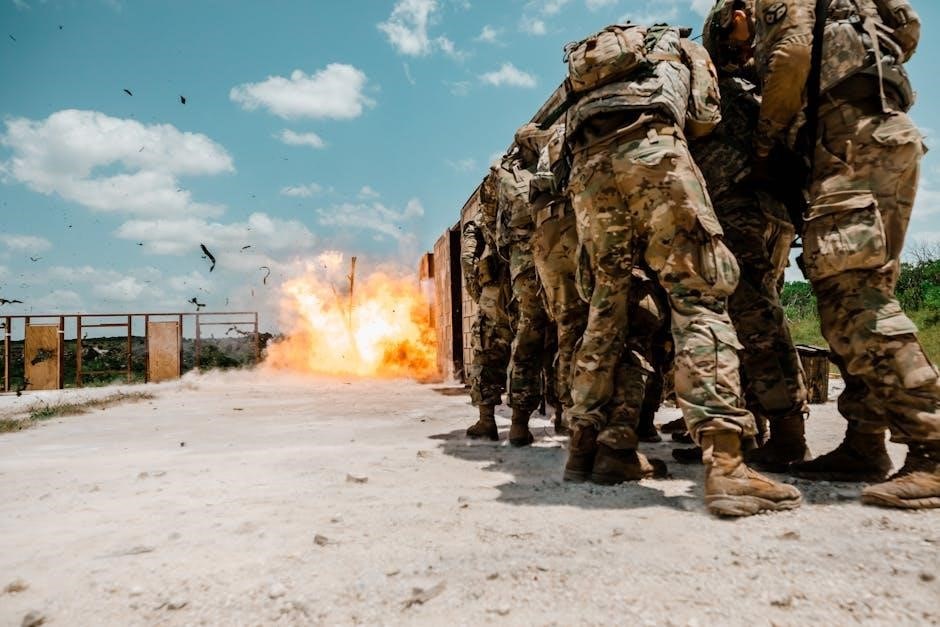
Obstacle Negotiation, as outlined in the 2022 PDF, is a fundamental skill for overcoming enemy defensive measures. These obstacles can range from simple wire entanglements to complex minefields and fortified barriers. Proficiency in this task is crucial for maintaining momentum during offensive operations and ensuring unit survivability.
The 2022 training emphasizes a systematic approach to obstacle negotiation, beginning with detection and identification. Soldiers must be able to recognize different types of obstacles and assess the associated risks. Techniques include breaching, bypassing, or clearing obstacles using specialized tools and equipment.
Resources available on platforms like StudyLib and SlideShare detail various breaching methods, including using explosives, mechanical devices, and hand tools. Safety is paramount; soldiers must adhere to strict procedures to avoid injury or triggering enemy defenses. Successful obstacle negotiation requires teamwork, discipline, and a thorough understanding of the principles involved.
Essential Battle Drills
The 2022 PDF focuses on immediate, instinctive reactions to common battlefield scenarios.
StudyLib and SlideShare resources highlight drills like reacting to ambush and indirect fire, vital for survival.
Battle Drill 1: React to Ambush
React to Ambush, as detailed in the 2022 PDF and resources like SlideShare presentations, is a critical battle drill focused on immediate survival and regaining the initiative. This drill emphasizes a swift, decisive response to a surprise attack. The initial actions involve immediate suppression of the enemy, utilizing available firepower to disrupt their attack and gain a momentary advantage.
Following suppression, Soldiers are trained to communicate the ambush situation – reporting enemy location, strength, and type of ambush. Movement is then executed to seek cover and concealment, allowing for a more organized defense or counterattack. The drill stresses the importance of assessing casualties and providing immediate medical attention.
Ultimately, the goal is to break contact if necessary, or to aggressively counterattack and neutralize the enemy threat. Effective execution of this drill, as highlighted in training materials, significantly increases survivability and mission success in an ambush situation. Constant practice and adherence to established procedures are paramount.
Battle Drill 2: React to Indirect Fire
React to Indirect Fire, a core component of the 2022 PDF and training resources, focuses on minimizing casualties and maintaining mission effectiveness during artillery or mortar attacks. The drill begins with immediate notification – yelling “Incoming!” to alert personnel. Soldiers must then quickly seek cover, utilizing available fortifications or terrain features, adopting the proper protective position (face down, hands over head).
Following the impact, a rapid assessment of casualties is crucial, prioritizing immediate medical attention. Communication is vital; reporting the impact location and any observed enemy activity. The drill emphasizes maintaining situational awareness, anticipating follow-on attacks, and preparing to displace if necessary.
The 2022 revision stresses the importance of disciplined reactions, avoiding panic, and adhering to established procedures. Effective execution, as detailed in SlideShare materials, significantly reduces the risk of injury and allows units to continue operations despite enemy fire. Regular practice reinforces these life-saving skills.
Battle Drill 3: Conduct a Limited Reconnaissance
Conducting a Limited Reconnaissance, as outlined in the 2022 PDF, is a critical battle drill for gathering immediate information about the enemy or terrain; This isn’t a full-scale recon mission, but a quick, focused observation to answer specific commander’s questions. The drill emphasizes stealth and speed, utilizing available cover and concealment to approach the objective undetected.
Teams employ observation techniques – scanning, sectoring, and utilizing binoculars – to identify enemy positions, obstacles, or potential hazards. Communication is paramount, relaying accurate and concise reports back to headquarters. The 2022 revision highlights the importance of prioritizing information, focusing on details directly impacting the unit’s mission.
Resources like those found on StudyLib emphasize the need for disciplined movement and avoiding unnecessary risk. Successful execution provides commanders with a clearer picture of the battlefield, enabling informed decision-making and enhancing operational success. A swift and discreet return is essential.
Battle Drill 4: Secure a Crossing Site
Securing a Crossing Site, detailed within the 2022 PDF, is a vital battle drill when encountering obstacles like rivers, roads, or railway lines. This drill focuses on establishing security before, during, and after crossing, minimizing vulnerability to enemy fire. Initial steps involve reconnaissance to identify potential enemy positions and suitable crossing points.
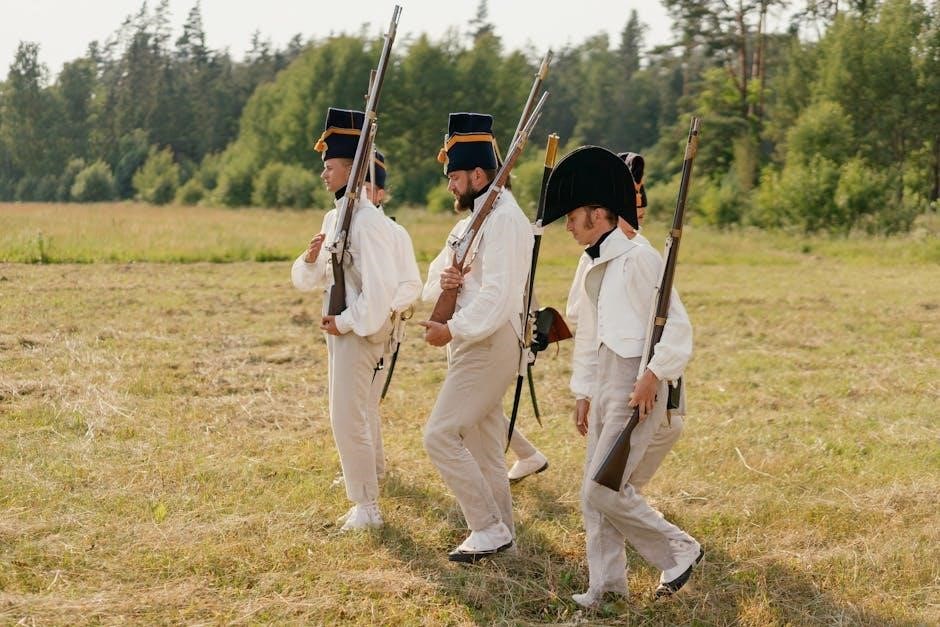
Teams employ suppressive fire to neutralize enemy threats while others prepare the crossing. Security elements establish overwatch positions, providing covering fire and early warning. The 2022 revision stresses the importance of prioritizing sectors of fire and maintaining situational awareness throughout the operation.
Resources from platforms like SlideShare highlight the need for coordinated movement and rapid establishment of a defensive perimeter on the far side. A thorough search of the crossing site for mines or other hazards is crucial. Successful execution ensures the safe and efficient passage of troops and equipment, maintaining momentum and minimizing casualties.
Advanced Battle Drills
The 2022 PDF outlines complex scenarios like attacking defenses, defending strongpoints, and conducting raids.
These drills demand higher-level tactical proficiency and coordinated team execution for success.
Battle Drill 5: Attack a Deliberate Defense
The 2022 PDF comprehensively details the procedures for executing an attack against a well-prepared, deliberate defense. This battle drill emphasizes breaking through fortified positions and overcoming enemy obstacles. It requires meticulous planning, coordinated maneuver, and the effective use of suppressive fires.
Key components include reconnaissance to identify enemy strengths and weaknesses, establishing a solid base of fire, and employing breaching techniques to create avenues of approach. Soldiers must be proficient in utilizing combined arms – integrating infantry, armor, and artillery – to maximize offensive capabilities. Successful execution necessitates understanding enemy defensive systems, including fighting positions, obstacles, and supporting weapons.
Furthermore, the drill stresses the importance of maintaining momentum, exploiting breaches, and consolidating gains. Effective communication and adaptability are crucial, as the enemy will likely react and attempt to counterattack. The 2022 revision likely incorporates lessons learned from recent conflicts, emphasizing the need for decentralized execution and rapid decision-making at the small unit level.
Battle Drill 6: Defend a Strongpoint
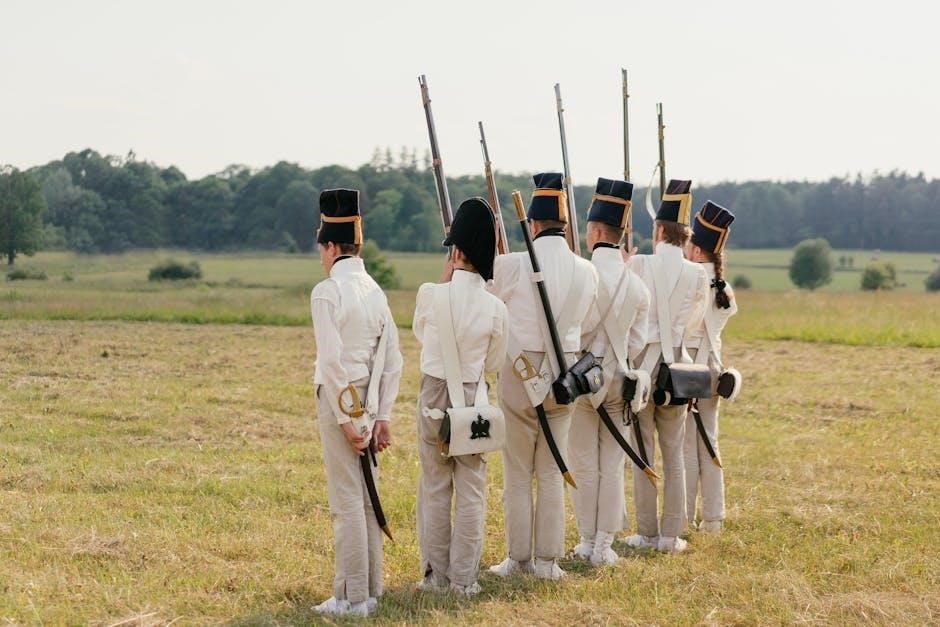
The 2022 PDF outlines the procedures for establishing and maintaining a robust defense of a designated strongpoint. This drill focuses on creating a layered defensive posture capable of withstanding enemy attacks and disrupting their advance. It demands thorough preparation, including the construction of fighting positions, the emplacement of obstacles, and the establishment of overlapping fields of fire.
Effective communication and coordination are paramount, ensuring all defenders understand their roles and responsibilities. Soldiers must be proficient in utilizing defensive weapons systems, employing camouflage and concealment, and reacting to enemy probing attacks. The drill emphasizes the importance of maintaining situational awareness and anticipating enemy movements.
The 2022 revision likely stresses the integration of technology, such as surveillance systems and communication networks, to enhance defensive capabilities. Furthermore, it probably details procedures for reinforcing the strongpoint, resupplying defenders, and coordinating with supporting elements. A successful defense requires resilience, discipline, and a commitment to holding the position at all costs.
Battle Drill 7: Conduct a Raid
The 2022 PDF details the execution of a raid – a swift, surprise attack aimed at achieving a specific, limited objective. This drill emphasizes speed, violence of action, and the element of surprise. Planning involves meticulous reconnaissance, target selection, and the development of a detailed assault plan, including contingencies for unexpected resistance.
Raiding forces must be proficient in movement techniques, breaching procedures, and close-quarters combat. Synchronization is critical, ensuring all elements arrive on target simultaneously and execute their assigned tasks efficiently. The drill likely highlights the importance of securing key personnel or equipment, destroying enemy assets, or gathering intelligence.
Post-raid procedures, including a rapid and orderly withdrawal, are also emphasized. The 2022 revision may incorporate updated tactics for minimizing collateral damage and adhering to the law of armed conflict. Successful raids demand aggressive leadership, disciplined execution, and a relentless focus on mission accomplishment.
Training and Evaluation
The 2022 PDF stresses realistic training, performance standards, and thorough After Action Reviews (AARs).
These methods ensure Soldiers master Warrior Tasks and Battle Drills effectively.
Methods of Instruction
The 2022 PDF emphasizes a blended learning approach to effectively teach Army Warrior Tasks and Battle Drills. This incorporates a variety of instructional methods designed to cater to different learning styles and maximize knowledge retention. Traditional classroom instruction, utilizing presentations and detailed explanations of each task, forms a foundational element.
However, the document strongly advocates for practical, hands-on training. This includes realistic scenario-based exercises, allowing Soldiers to apply learned techniques in simulated combat environments. Repetition and progressive training are key, starting with basic skills and gradually increasing complexity. Mentorship from experienced leaders and non-commissioned officers is also highlighted as a crucial component.
Furthermore, the 2022 PDF suggests leveraging available online training platforms and resources to supplement in-person instruction. These digital tools can provide Soldiers with opportunities for self-paced learning and reinforcement of key concepts. The emphasis is on creating a dynamic and engaging learning experience that prepares Soldiers for the challenges of the modern battlefield, as indicated by resources found on sites like StudyLib and SlideShare.
Performance Standards and Assessment
The 2022 PDF outlines clear, measurable performance standards for each Warrior Task and Battle Drill, ensuring consistent evaluation across the Army. Assessment isn’t simply pass/fail; it focuses on demonstrating proficiency in all critical steps and adhering to established safety protocols. Observation by qualified evaluators is a primary method, with checklists used to document performance against specific criteria.
Evaluators assess not only what a Soldier does, but how they do it – emphasizing speed, accuracy, and tactical decision-making. The document stresses the importance of realistic scenarios that replicate the stress and uncertainty of combat. Written tests may supplement practical exercises to gauge understanding of underlying principles.
Furthermore, the 2022 PDF emphasizes the need for regular assessment and retraining. Soldiers who don’t meet standards receive targeted remediation to address deficiencies. Resources like those found on StudyLib and SlideShare highlight the ongoing nature of this process, with continuous improvement as a core objective. Consistent evaluation ensures Soldiers maintain a high level of combat readiness.
The Role of After Action Reviews (AARs)
The 2022 PDF places significant emphasis on After Action Reviews (AARs) as a crucial component of training and improvement for Warrior Tasks and Battle Drills. AARs aren’t simply critiques; they are structured discussions designed to identify lessons learned – both successes and failures – in a non-punitive environment.
The document stresses that AARs should be conducted immediately following each training event, while details are still fresh in participants’ minds. Facilitators guide the discussion, prompting Soldiers to analyze their performance, identify areas for improvement, and propose solutions. Key questions focus on what was planned, what actually happened, and why the difference occurred.
Resources like those available on StudyLib and SlideShare reinforce that effective AARs foster a culture of continuous learning. The 2022 PDF highlights that AAR findings should inform future training iterations, ensuring that lessons learned are incorporated to enhance proficiency and combat readiness. AARs are vital for adapting to evolving battlefield conditions.
Resources and Documentation
The 2022 PDF is accessible through official Army channels.
Supporting publications and online platforms, like StudyLib and SlideShare,
offer supplementary materials for comprehensive training and understanding.
Accessing the 2022 PDF
Locating the official Army Warrior Tasks and Battle Drills (2022) PDF requires navigating to authorized distribution channels. While direct links can change, a primary source is often found through the Army’s official publications website or knowledge management systems accessible to personnel. Several online resources, such as StudyLib, archive and host versions of these documents, though verifying the document’s currency is crucial.
Caution is advised when downloading from unofficial sources. Always prioritize obtaining the PDF from a verified Army domain to ensure you have the most up-to-date information and haven’t downloaded a compromised file. Slideshare and similar platforms may contain older versions or excerpts, useful for supplemental understanding but not for official training purposes.
Furthermore, unit training officers and NCOs typically maintain copies for their Soldiers. Checking with your chain of command is a reliable method for accessing the current 2022 PDF and associated training materials. Remember to regularly check for updates, as these tasks and drills are under constant review based on operational feedback.
Supporting Publications and References
Complementing the 2022 Army Warrior Tasks and Battle Drills PDF are several supporting publications vital for comprehensive understanding and effective implementation. Field Manuals (FM) detailing specific weapon systems, movement techniques, and combat tactics provide in-depth guidance. Army Training Circulars (TC) offer practical application scenarios and training exercises.
Resources like the Soldier’s Manual of Common Tasks (SMCT) and the Warrior Training CD-ROM (though potentially outdated, concepts remain relevant) offer foundational knowledge. Websites such as StudyLib archive related documents, but verification of currency is paramount. Slideshare presentations, while useful for overview, shouldn’t replace official manuals.
Additionally, unit-specific Standard Operating Procedures (SOPs) should align with the Warrior Tasks and Battle Drills, tailoring them to the unit’s mission and environment. Continuous professional development through online platforms and formal courses reinforces these skills. Always prioritize official Army publications for accurate and current information.
Online Training Platforms
Numerous online platforms supplement the 2022 Army Warrior Tasks and Battle Drills PDF, offering interactive learning experiences. The Army’s own digital training resources, such as the Army Learning Management System (ALMS), provide structured courses and assessments. These platforms often feature scenario-based simulations enhancing practical application.
Commercial platforms, while not officially endorsed, can offer supplementary training modules. However, verifying content alignment with current Army doctrine is crucial. Virtual reality (VR) and augmented reality (AR) technologies are increasingly utilized to simulate battlefield conditions, improving decision-making skills.
Websites archiving presentations, like SlideShare, can provide visual aids, but should not be the primary source of training. Remember to cross-reference information with official Army publications. Effective online training requires discipline, self-assessment, and a commitment to continuous learning, reinforcing the skills detailed in the 2022 PDF.